
A generic drug is a pharmaceutical drug that contains the same chemical substance as a drug that was originally protected by chemical patents. Generic drugs are allowed for sale after the patents on the original drugs expire. Because the active chemical substance is the same, the medical profile of generics is believed to be equivalent in performance.
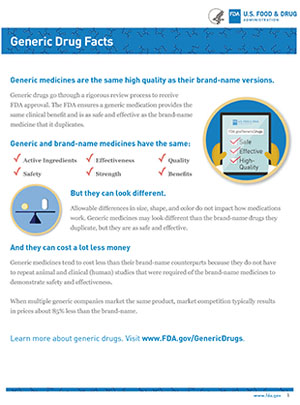
A generic medicine works in the same way and provides the same clinical benefit as its brand-name version. This standard applies to all FDA-approved generic medicines. A generic medicine is the same as a brand-name medicine in dosage, safety, effectiveness, strength, stability, and quality, as well as in the way it is taken and should be used.
The FDA Generic Drugs Program conducts a rigorous review to make sure generic medicines meet these requirements. In addition, FDA conducts 3,500 inspections of manufacturing plants a year, ensuring compliance with the agency’s regulations on good manufacturing practices.
FDA staff also continually monitor drug products to make certain the medicines at all levels of the supply chain, from active pharmaceutical ingredients (API) to products being sold to consumers, are safe, effective, and high quality. In the event of reports of negative patient side effects or other reactions, the FDA investigates and, when appropriate, may require changes in how a medicine (both brand-name and generic versions) is used or manufactured.
Generic drugs must meet high standards to receive FDA approval
FDA requires drug companies to demonstrate that the generic medicine can be effectively substituted and provide the same clinical benefit as the brand-name medicine that it copies. The abbreviated new drug application (ANDA) submitted by drug companies must show the generic medicine is the same as the brand-name version in the following ways:
- The active ingredient in the generic medicine is the same as in the brand-name drug/innovator drug.
- The generic medicine has the same strength, use indications, form (such as a tablet or an injectable), and route of administration (such as oral or topical).
- The inactive ingredients of the generic medicine are acceptable.
- The generic medicine is manufactured under the same strict standards as the brand-name medicine.
- The container in which the medicine will be shipped and sold is appropriate, and the label is the same as the brand-name medicine’s label.
Approved generic medicines are generally only sold after patents and exclusivities protecting the brand-name version end
Patents and exclusivities are forms of protection for drug makers that may affect how and when a generic drug is approved and can be sold. New brand-name drugs are usually protected by patents (issued by the U.S. Patent and Trademark Office) that prohibit others from selling generic versions of the same drug. Periods of marketing exclusivity for brand-name drugs can also impact the approval of generic drugs.
FDA must comply with the delays in approval that the patents and exclusivities impose. Once these patents and marketing exclusivities expire (or if the patents are successfully challenged by the generic drug company), the generic drug can receive full approval and can be sold.
Generic medicines cost less than brand-name medicines
Generic medicines tend to cost less than their brand-name counterparts because they do not have to repeat animal and clinical (human) studies that were required of the brand-name medicines to demonstrate safety and effectiveness. In addition, multiple applications for generic drugs are often approved to market a single product; this creates competition in the marketplace, typically resulting in lower prices.
The reduction in upfront research costs means that, although generic medicines have the same therapeutic effect as their branded counterparts, they are typically sold at substantially lower costs. When multiple generic companies market a single approved product, market competition typically results in prices about 85% less than the brand-name. According to the IMS Health Institute, generic drugs saved the U.S. health care system $1.67 trillion from 2007 to 2016.
For more information about generic medicines
Contact your doctor, pharmacist, or other health care provider to discuss generic medicines. For more information, you can also:
Visit the FDA Generic Drugs Program web page.
 School of Nursing Ilaro